
P20 prehardened mould steel: selection, machining and application limits
· Materials knowledge
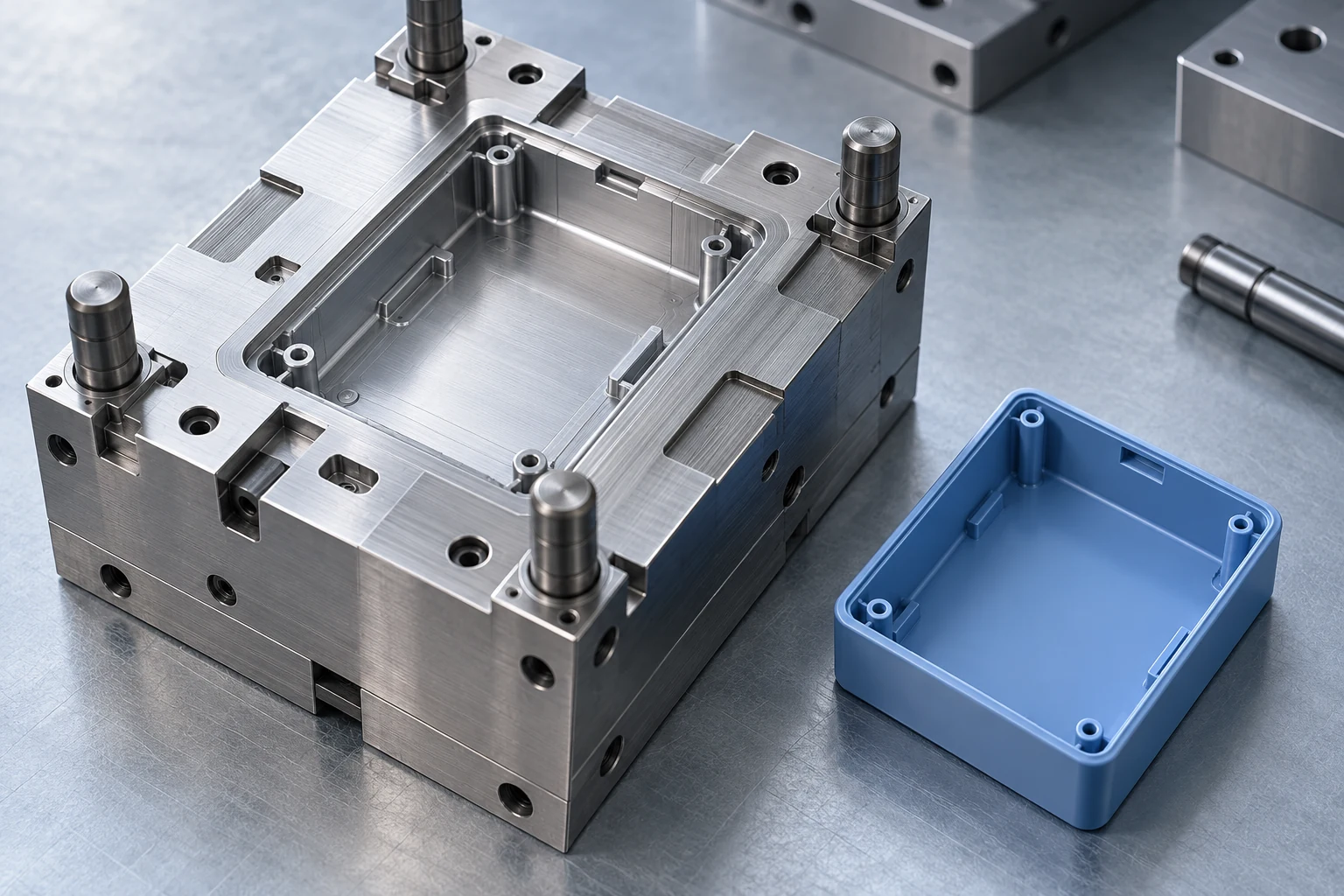
A practical guide to choosing P20-family prehardened mould steel by checking part finish, tool size, resin, delivery condition and maintenance needs.
A practical guide to choosing P20-family prehardened mould steel by checking part finish, tool size, resin, delivery condition and maintenance needs.
What prehardened means
Prehardened mould steel is supplied in a condition intended for machining without a later overall hardening operation in suitable applications. It is still necessary to confirm the actual delivery condition. A family name alone does not establish the hardness profile, surface quality or suitability of a particular block.
Specify the standard, supplier designation and delivery condition together. P20-family variants are not interchangeable simply because a quotation uses a similar short name.
Start with the moulded part
For a plastic enclosure project, describe the required appearance before selecting steel: a textured surface and a demanding transparent surface are different requirements. Identify the resin and any reinforcement, then discuss wear, corrosion and maintenance separately.
Write down the intended production run and the consequences of stopping the tool. These are project questions, not a reason to assume that the highest quoted hardness is always preferable.
Coordinate machining and acceptance
Send a drawing showing the largest section, deep cavities, thin walls and expected stock removal. Agree how identification, delivery condition and dimensions will be checked after cutting. Keep material identity attached to each blank.
Tell the supplier early about polishing, texturing, welding or later surface treatment. A purchasing decision is more useful when it includes the operations that will follow machining.
A quotation checklist
Provide the resin, intended use, blank and finished dimensions, delivery condition, documentation requirements and appearance criteria. Compare proposals against the same requirements rather than comparing only a price per kilogram.
Use the batch certificate and agreed technical conditions for the actual purchase. Manufacturer references explain the selection route; they do not make every P20-family supply identical.
Technical references
This is an educational selection guide, not a batch inspection report. Brand references illustrate material families and do not imply automatic equivalence or a commercial agency relationship. The cover is an AI-generated illustration, not a photograph of our equipment, customer project or delivered part.