D2-family cold-work steel: balancing wear resistance and edge reliability
· Materials knowledge
Not every blanking-tool problem is ordinary wear. Use a D2-family example to organize a practical discussion of edge damage, tool conditions and acceptance requirements.
Not every blanking-tool problem is ordinary wear. Use a D2-family example to organize a practical discussion of edge damage, tool conditions and acceptance requirements.
Separate gradual wear from local damage
D2-family cold-work steels are associated with wear-oriented tooling applications. A gradually dulling edge and a sudden local chip should still be recorded as different events. The material family name does not tell you which response is appropriate for every tool problem.
Provide the process information
For a blanking project, specify the work material, thickness range, cut shape and production arrangement. Add the punch section, edge geometry, support and designed clearance. A request for a wear-resistant steel alone leaves important questions unanswered.
Compare proposals using a defined workpiece and a consistent recording method. Changes in stock, edge condition or maintenance can otherwise be mistaken for changes caused by the steel.
Make maintenance records comparable
Record the location and timing of local damage before asking for a higher hardness. If wear is the dominant maintenance issue, discuss the material and treatment condition using the same evidence.
Include the amount removed during regrinding and the condition on return to service. A newly prepared edge should not be compared casually with a tool that has already passed through several maintenance cycles.
Specify the actual purchase
State the applicable standard, exact designation, delivery condition, dimensions and inspection requirements. Cross-standard tables help locate possible candidates; they do not authorize automatic substitution between D2, SKD11 or other names.
Keep the certificate, manufacturing history and service observations linked to the same tool. Revisit the operating requirements if the original selection no longer fits them, rather than treating a higher quoted hardness as a complete solution.
Technical references
- Uddeholm Sverker 21 — manufacturer technical reference
- Uddeholm Sverker 21 技术资料 — manufacturer technical reference
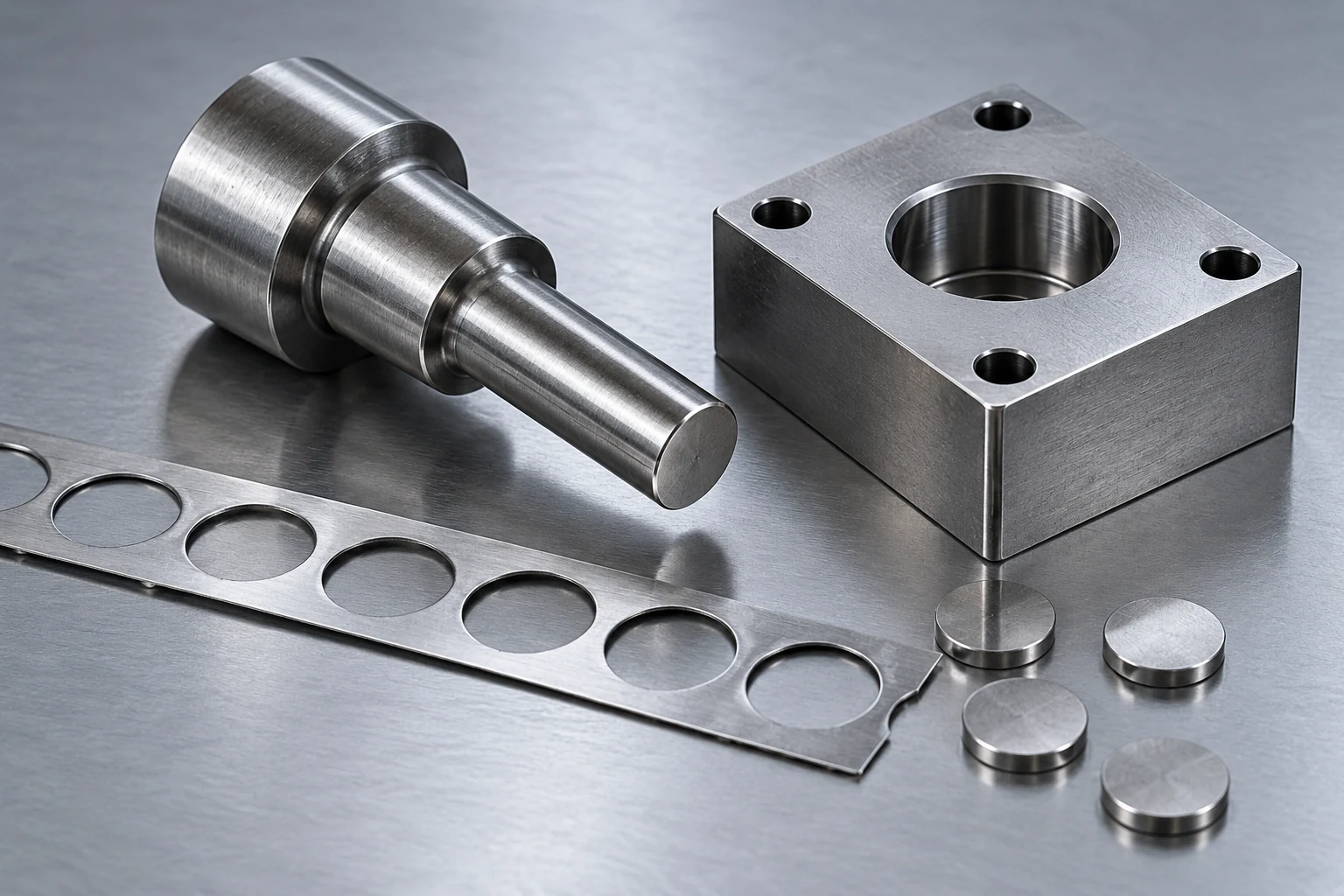
This is an educational selection guide, not a batch inspection report. Brand references illustrate material families and do not imply automatic equivalence or a commercial agency relationship. The cover is an AI-generated illustration, not a photograph of our equipment, customer project or delivered part.